How to Facilitate Adult Learning That Leads to Lasting Change
September 4, 2026
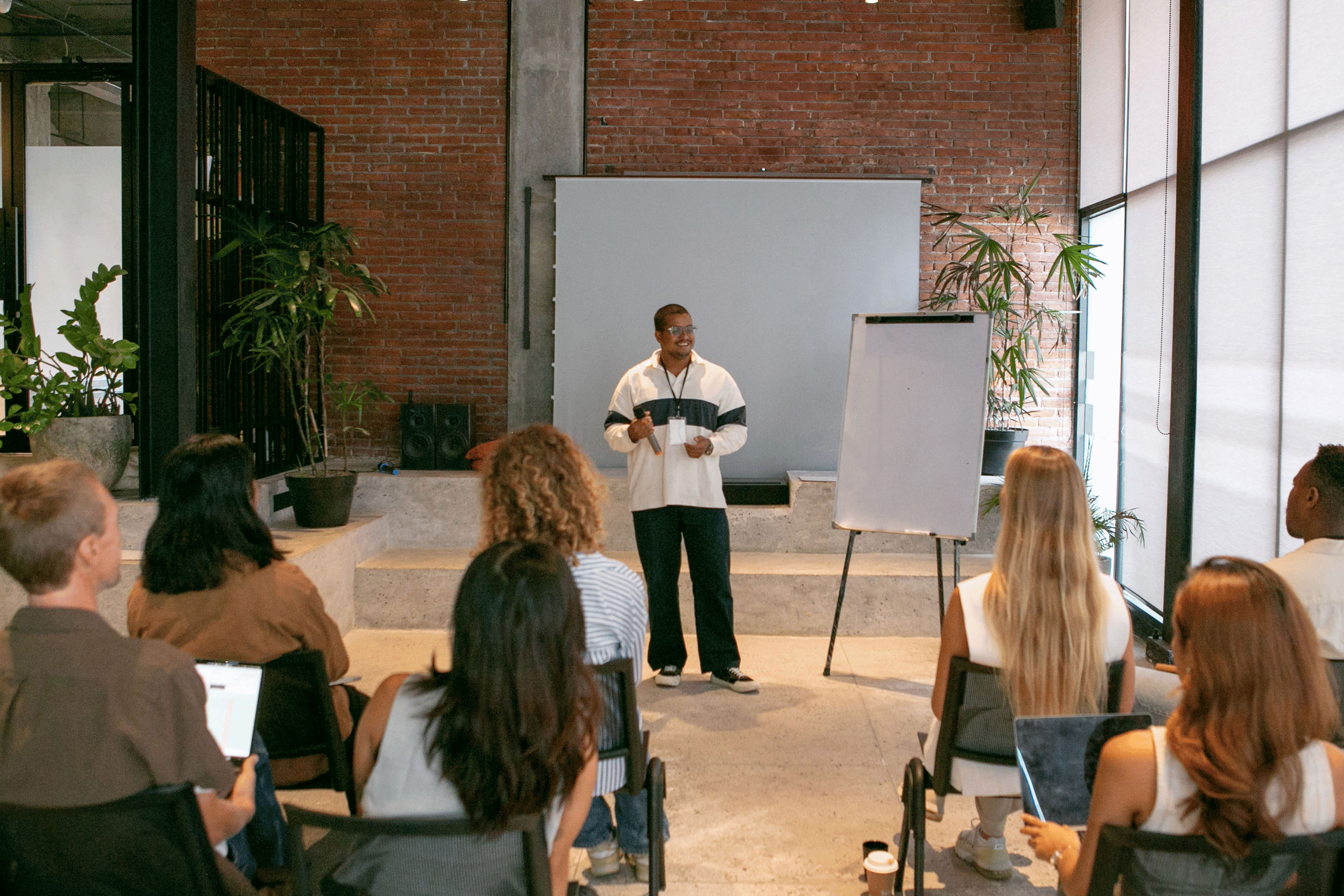
You can't make adults learn. You can create the conditions that make learning possible.
One of the questions I'm asked most often is how to keep adults engaged during professional learning.
Sometimes the person asking is a principal planning a day of professional development for teachers. Sometimes it's an instructional coach leading a learning community or a consultant facilitating a workshop. The settings are different, but the underlying concern is remarkably consistent.
How do I create a learning experience that people genuinely participate in?
I understand why that question comes up so often. Most of us have participated in professional learning where the facilitator worked incredibly hard while participants quietly checked email, waited for the next break, or contributed only when they were directly invited into the conversation. It's easy to leave those experiences believing that the problem was engagement and that the solution is to become a more dynamic presenter or find more interactive activities.
After more than two decades of designing and facilitating professional learning, I've found the root issue is that the learning experience wasn't designed to honor how adults actually learn.
Do participants understand why they're there? Are they working on problems that matter to them? Have they had opportunities to connect new ideas to their own experience? Do they feel safe enough to ask honest questions, disagree respectfully, or admit uncertainty?
Those questions have become much more useful to me than asking how to keep people engaged because they shift my attention away from trying to capture participants' attention and toward designing learning experiences that make meaningful participation much more likely.
They've also led me to one of the most important lessons I've learned as a facilitator:
You can't make adults learn.
At first, that idea felt almost discouraging. Like many facilitators, I entered this work because I wanted to help people learn and grow. If I couldn't make learning happen, what exactly was my responsibility?
Over time, I've realized that this perspective is actually incredibly liberating.
Adults decide whether they'll examine a long-held belief, experiment with a new practice, or continue reflecting on an idea after the workshop ends. Those decisions belong to them, not to me. My responsibility is different. My responsibility is to create a learning experience that makes those decisions more likely—to thoughtfully design the conditions in which adults can think deeply, make meaning of new ideas, practice unfamiliar skills, and imagine new possibilities for their work.
That shift has changed almost everything about how I facilitate professional learning.
Instead of asking whether I've explained an idea clearly enough, I find myself wondering whether participants have had enough time to wrestle with it themselves. Instead of trying to keep people engaged every minute, I think about whether the learning is meaningful enough for engagement to be a natural consequence. And instead of measuring success by how much content we've covered, I think about whether people are likely to return to work seeing themselves and their practice a little differently than they did when they arrived.
I don't always get those things right.
But they've become the questions that guide my planning and facilitation, and they've helped me understand why some learning experiences stay with people for years while others disappear almost as quickly as they end.
If this idea feels different from the way you've typically thought about professional development, you might enjoy reading What Makes Professional Development Effective? It explores why I think the goal of professional learning isn't simply helping people learn—it's helping them change their practice.
Adults Don't Learn the Way We Sometimes Design Professional Development
One of the easiest mistakes to make when facilitating adult learning is to assume that adults learn in the same way many of us experienced school ourselves: someone with expertise presents information, participants take notes, ask a few questions, and then leave ready to apply what they've learned.
Sometimes that happens.
More often, it doesn't.
Adults don't arrive at professional learning as blank slates waiting to be filled with new information. They bring years of experience, deeply held beliefs, successful practices, disappointments, unanswered questions, and stories about what has and hasn't worked. They also bring emotions. Someone may arrive excited to learn. Someone else may feel overwhelmed by one more initiative. Another participant may be quietly wondering whether this workshop will be any different from the last several they've attended.
None of that disappears simply because the workshop begins.
In fact, I think one of the most important responsibilities facilitators have is recognizing that those experiences, beliefs, and emotions are part of the learning. We don't need participants to set them aside. We need to design learning experiences that invite people to examine them.
When I ask participants to reflect on the most powerful professional learning they've ever experienced, they almost never begin by describing an excellent PowerPoint presentation or a particularly memorable handout. They talk about conversations that changed how they saw their work, questions they continued thinking about long after the workshop ended, or opportunities to practice something new with colleagues they trusted.
That's not a coincidence.
Adults learn by making meaning. Information certainly has a place, and there are moments when participants need direct instruction or a shared framework before they can move into deeper learning. But information alone rarely changes practice. Lasting learning happens as people connect new ideas to what they already know, test those ideas against their own experience, discuss them with others, and begin imagining what those ideas might look like in their own work.
The Facilitator's Job Is to Create the Conditions for Learning
It took me years to realize that facilitation isn't primarily about delivering information. When I first started leading professional learning, I spent a great deal of time thinking about what I was going to say. I wanted clear explanations, engaging examples, and answers to every question participants might ask. I assumed that if I communicated well enough, learning would naturally follow.
Experience has made me think differently.
Today, I still care deeply about clarity, but I no longer believe my role is to convince people or simply help them understand an idea. My role is to create an experience that invites them to think, question, connect, and practice. Those are very different responsibilities.
That's one of the reasons I keep returning to the idea that we can't make adults learn. Once I stopped trying to shoulder responsibility for everyone's learning, I found I had much more energy to focus on what I could influence. I could design more thoughtful experiences. I could become more curious about what participants were thinking. I could pay closer attention to what was happening in the room instead of worrying about whether I had explained something perfectly.
Ironically, I think that shift made me a much better facilitator.
Purpose Comes Before Activities
One of the first questions people ask when they're planning professional learning is, "What activities should I include?"
I understand the impulse. Activities are tangible. They fill an agenda. They help us imagine what participants will actually be doing throughout the day. But I've found that beginning with activities often leads to workshops that feel busy without being particularly meaningful.
Instead, I try to begin somewhere else.
Before I decide whether participants will work in pairs, analyze a case study, or engage in a role play, I ask myself the same question I described in the previous article:
What do I hope people will be able to do differently because of our time together?
That question helps me clarify the purpose of the learning before I consider how it will unfold.
Once I know the change I'm hoping to support, choosing activities becomes much easier. They're no longer interesting exercises that happen to fit the topic. They're experiences intentionally designed to help participants move toward a particular outcome.
I've noticed that when facilitators skip this step, they often end up asking participants to do engaging but disconnected activities. People enjoy themselves, but they leave unsure why they spent their time that way.
Purpose gives coherence to a learning experience. It helps participants understand not only what they're doing, but why it matters.
If you're wondering what that planning process actually looks like, I share it step by step in How to Design a Professional Development Workshop That Changes Practice.
Adults Learn by Making Meaning
One of the most consistent patterns I've observed is that adults rarely change because someone told them what to do.
They change because they've made sense of something for themselves.
That distinction is easy to overlook, especially when we're facilitating in front of a large group. It can feel efficient to explain an idea thoroughly and then move on. After all, everyone has received the same information.
But receiving information and making meaning aren't the same thing.
Making meaning is active. It asks participants to compare new ideas with what they already believe, test those ideas against their own experience, notice where they feel resistance, and imagine what implementation might actually look like. None of that can happen while people are only listening.
This doesn't mean every workshop needs constant discussion or endless table conversations. Reflection can happen quietly. Sometimes the most important learning takes place while someone is writing in a notebook or sitting with a question they haven't quite answered yet.
The important point is that participants need opportunities to do the intellectual work themselves.
When I look at a workshop agenda now, I pay less attention to how many activities are included and more attention to where participants will have opportunities to make meaning. If every important insight comes from the facilitator, I've probably designed too much telling and not enough learning.
What Meaningful Participation Actually Looks Like
I sometimes hear facilitators say they want every participant to talk all the time because that's what engagement looks like.
I don't believe that is true. Some of the most meaningful moments I've experienced in professional learning have been remarkably quiet.
I've watched a room become completely still after someone asked a question that challenged a deeply held assumption. I've seen participants spend several minutes writing as they tried to make sense of something they hadn't considered before. I've listened to pairs of colleagues work carefully through a dilemma that didn't have an obvious solution.
None of those moments would look particularly exciting to someone walking past the room, but they were deeply engaging.
Meaningful participation isn't measured by noise level or by how many people raise their hands. It's measured by whether participants are doing the work of learning. Are they examining assumptions? Connecting ideas? Wrestling with uncertainty? Practicing something unfamiliar? Listening carefully enough that another person's perspective genuinely influences their own?
That's the type of engagement I hope to see.
They often require us, as facilitators, to become comfortable with silence. Not every moment needs to be filled. Sometimes people need space to think before they're ready to speak, and honoring that process is part of honoring how adults learn.
How Do You Know Adults Are Actually Learning?
One of the challenges with facilitating adult learning is that we can't always see learning happening in the moment.
If participants are laughing and talking, it's tempting to assume they're engaged. If they're quiet, we may worry that we've lost them. Neither assumption is necessarily true.
I've facilitated sessions where the room was buzzing with conversation, yet participants stayed comfortably within ideas they already agreed with. I've also facilitated workshops where people spent long stretches writing quietly or thinking before speaking, only to discover later that those moments had led to some of the most significant shifts in perspective.
Learning doesn't always look the way we expect it to.
Instead of asking whether participants appear engaged, I think it's more helpful to focus on the kinds of thinking they're doing.
- Are they asking questions they weren't asking at the beginning of the workshop?
- Are they making connections between new ideas and their own experience?
- Are they challenging assumptions they've held for years?
- Are they beginning to imagine how they might approach their work differently?
Those are signs that participants are doing the work of learning. They're making meaning. Ultimately, that's what we're hoping for—not simply that people understand our ideas, but that they're integrating those ideas into how they see themselves and their work.
The Learning Continues After the Workshop
One of the things I appreciate most about facilitating adults is that learning rarely ends when the workshop does.
People often tell me that they didn't fully understand something we explored until several days later. A conversation with a colleague, a difficult coaching session, or an unexpected challenge in their school suddenly brought an idea back to them. They tried something different, reflected on the outcome, and discovered that the workshop was still influencing their thinking long after it had ended.
I've come to see those moments as an important reminder that professional learning doesn't happen on our timeline.
As facilitators, we naturally want to know whether a training "worked." We want evidence that participants found it valuable and that our planning made a difference.
Sometimes we receive that evidence immediately. More often, we don't.
Someone sends an email six months later describing a conversation that changed because of something they practiced during the workshop. A principal shares that faculty meetings feel different because of a protocol they learned. A coach describes asking a different question than they would have asked before.
Those stories remind me that our work is to create experiences that continue unfolding after people return to their work.
Becoming the Kind of Facilitator Adults Want to Learn From
People sometimes ask me what distinguishes exceptional facilitators from good facilitators.
It's rarely a matter of personality. It's not about having the funniest stories or the most polished slides.
In my experience, exceptional facilitators are deeply curious about how adults learn.
They're paying attention to participants rather than performing for them.
They're noticing where people are making meaning, where confusion is emerging, where trust is growing, and where participants need more time to think. They aren't trying to control every moment of the learning experience. Instead, they're responding thoughtfully to what's happening in the room while remaining anchored in the purpose of the learning.
That kind of facilitation takes practice. It also requires humility.
Every workshop teaches us something. Every group responds differently. Every facilitation experience offers another opportunity to reflect, refine, and continue learning ourselves.
The best facilitators I've learned from are also some of the most committed learners I know.
The Question I Return to Again and Again
Whenever I'm planning professional learning, I eventually find myself returning to the same question:
What conditions will help people do the work of learning?
Notice that it's a different question from asking how to keep people engaged. It's also different from asking how much content I can cover or how many activities I can fit into the agenda.
When I focus on creating conditions for learning, my planning changes.
I make more room for reflection. I become more intentional about the questions I ask. I pay closer attention to how trust is built throughout the day. I think carefully about where participants will have opportunities to practice, receive feedback, and connect new ideas to the challenges they're already facing.
Adults always retain the freedom to decide how they'll engage with new ideas, so those decisions don't guarantee that learning will happen. But I've found that they dramatically increase the likelihood that people leave not only understanding something new, but beginning to see themselves and their work differently.
And I think that's what we're really hoping for.
Key Takeaways
Effective facilitation of adult learning:
- Begins with understanding how adults learn rather than how to keep them entertained.
- Creates the conditions for reflection, discussion, practice, and meaning-making.
- Starts with a clear purpose before selecting activities or designing an agenda.
- Builds trust before asking participants to take learning risks.
- Invites participants to do the intellectual work instead of relying on the facilitator to do it for them.
- Continues beyond the workshop through practice, reflection, and application.
Questions I Hear Most Often
One of the things I enjoy most about facilitating professional learning is that the conversation rarely ends when the workshop does. These are some of the questions I'm asked most often.
How do adults learn best?
Adults learn best when they're actively making meaning of new ideas through reflection, discussion, practice, and feedback. Information is important, but lasting learning happens when people connect those ideas to their own experience and begin applying them in their work.
What's the best way to keep adults engaged during professional development?
Rather than focusing on engagement itself, focus on purpose, relevance, and meaningful participation. Adults are far more likely to engage when they're working on problems that matter to them, understand why the learning is important, and have opportunities to contribute their own thinking.
What if participants don't want to participate?
Before changing your activities, consider whether enough trust has been established. Meaningful participation depends on psychological safety as much as facilitation techniques. People are much more willing to contribute when they believe their ideas will be respected and when they understand why their participation matters.
How do I become a better facilitator of adult learning?
Like any complex practice, facilitation develops over time. Reflect after every workshop. Notice who did most of the thinking. Pay attention to when participants seemed most curious or most hesitant. Continue learning alongside other facilitators, seek feedback, and treat every learning experience as an opportunity to refine your practice.
Keep Learning
Want to go deeper? The PD Book: 7 Habits That Transform Professional Development explores these ideas in much greater depth, with practical tools, planning processes, reflection questions, and stories drawn from decades of facilitating professional learning.
Continue Reading
- What Makes Professional Development Effective?
- How to Design a Professional Development Workshop That Changes Practice
- Why Doesn't Professional Development Change Practice?
Explore Resources
Discover our collection of downloadable tools and podcasts to continue strengthening your facilitation and professional learning practice.
Learn With Us
Wherever you are in your facilitation journey, we'd love to support your continued growth.
- PD That Changes Practice: Learn how to design and facilitate professional learning that leads to changed practice.
- Art of Virtual Facilitation: Develop the skills to facilitate engaging, meaningful online learning experiences.
- The Facilitation Studio: Continue growing year-round through live practice, coaching, demonstrations, and a community of facilitators committed to refining their craft.



Bright Morning Podcast