How Do You Handle Difficult Participants During a Workshop?
October 2, 2026
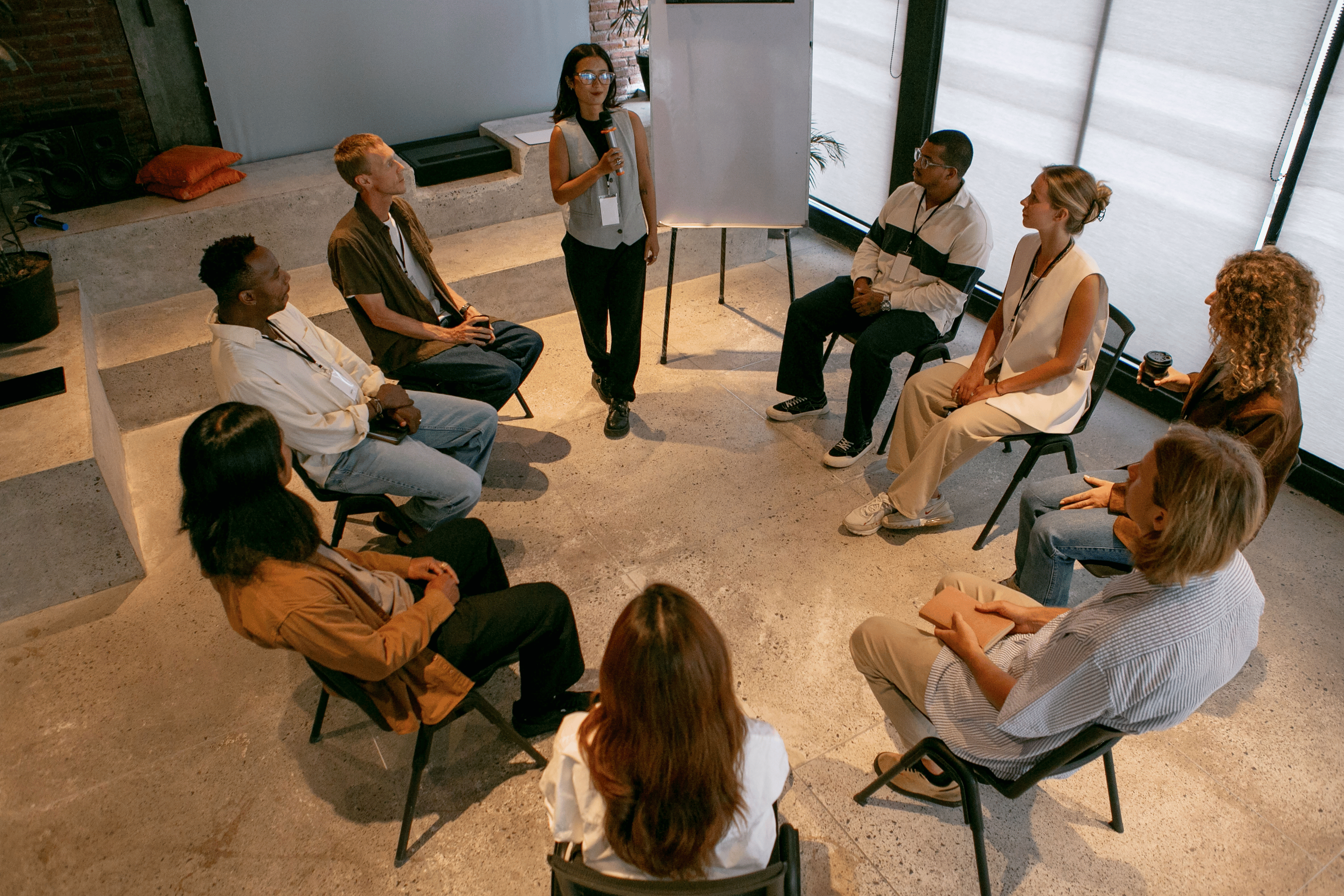
At some point, every facilitator encounters a participant who changes the energy in the room. Someone challenges nearly everything you say, keeps talking while others are trying to listen, refuses to participate in an activity, or turns a skeptical comment into a debate that begins consuming the session.
When this happens, it can be tempting to think, How do I get this person to stop? I understand that impulse. When I'm facilitating, I'm holding an agenda, watching the clock, paying attention to dozens of people, and trying to create an experience that matters. It can feel as if that one pesky participant is threatening it all.
But I've learned that labeling someone "difficult" rarely helps me figure out what to do next. The behavior may be difficult, and the situation may absolutely need my intervention, but the person in front of me is usually responding to something.
My job as a facilitator is to figure out what's happening, determine what the group needs from me, and respond in a way that protects the conditions for learning. Sometimes that means getting curious. Sometimes it means changing the plan. And sometimes it means setting a very clear boundary.
Knowing what a moment calls for is something you develop with experience, reflection, and practice.
Before You Decide Someone Is "Difficult", Get Curious
Resistance is one of the most common challenges facilitators ask me about. It can look like crossed arms, questions about the workshop's purpose, complaints that participants have already completed similar training, refusal to participate in an activity, or frustration about who is—or isn't—in the room.
It's easy to experience those behaviors as a challenge to our competence or authority, especially when they happen publicly. Once we feel challenged, we're more likely to become defensive: we double down on explanations, defend the activity, remind people that attendance is required, or try to regain control of the room.
That response can turn a manageable moment into a power struggle.
Instead, I try to get curious about what the behavior might be telling me. Maybe participants don't understand why the learning matters. Maybe they weren't given any choice about attending. Maybe they have knowledge or experience that hasn't been acknowledged, there's organizational history I know nothing about, or the activity genuinely isn't working. Sometimes the participant has a legitimate disagreement with what I'm teaching.
In The PD Book, I describe resistance as an expression of emotions tied to unmet needs, such as autonomy, contribution, belonging, consideration, choice, or participation. Understanding the need doesn't mean you have to satisfy every request; it gives you more information about what you're actually responding to.
The First Facilitation Move: Slow Down
When something unexpected happens during a workshop, facilitators often feel pressure to respond immediately. In reality, one of the most useful things you can do is slow yourself down long enough to notice what is happening in the room—and in you.
Maybe you're embarrassed because someone challenged you in front of the group. Maybe you're irritated because you spent hours preparing an activity only to have someone dismiss it. Maybe you're worried that the rest of the room is losing confidence in you, or you're simply watching the clock and thinking about everything you still need to cover.
Your emotional response is essential information.
I'm a better facilitator when I can notice my own discomfort without immediately reacting to it. Even a few seconds gives me time to consider what actually happened, how it is affecting the rest of the group, whether anyone has been harmed, and how much trust exists in the room. I can also ask myself what I can realistically influence right now and whether the situation needs immediate attention or can be revisited later.
This is the beginning of adaptive facilitation. In The PD Book, I describe the first step when a workshop goes off course as slowing down to regulate yourself, consider the context, and respond intentionally rather than abruptly.
Not every detour deserves the same response. A skeptical question is different from a hurtful comment, and two people whispering while they clarify directions is different from a side conversation that has continued for thirty minutes and is making it hard for everyone around them to learn.
The facilitator's job is to tell the difference.
Scenario 1: A Participant Is Skeptical or Resistant
Imagine you're introducing an activity and someone says, "I don't see how this is going to help us."
There are several ways you could respond. You could defend the activity, remind them that everyone is expected to participate, ignore the comment and keep going, or treat the skepticism as information.
Start with curiosity.
You might say, "Tell me a little more about what you're wondering," or, "It sounds like you're not sure this connects to what you need. Is that right?"
Their answer may tell you that they misunderstood the purpose, that they've completed a very similar activity before, or that they're naming a concern several other people in the room share. You might even realize that the activity you designed doesn't make sense for this particular group.
Of course, listening doesn't mean you have to change the plan every time someone objects. Often, after hearing the concern, I'll still ask the group to continue. I might say, "I hear why you're skeptical. I want to ask you to try this with us for the next fifteen minutes because it connects directly to what we're working toward, and then I'd like to hear what you think."
Curiosity doesn't require surrendering the agenda. It helps you respond to what is actually happening rather than to the story you've created about the participant.
Scenario 2: Someone Keeps Challenging You
Questions and challenges can make the learning richer. But when one person repeatedly challenges the facilitator, the dynamic can start to consume the group's attention.
Imagine someone has questioned you four or five times in the first hour, and every question turns into a long exchange. You notice other participants stop raising their hands because they know where the conversation will go, or they begin looking down when the person starts speaking.
At that point, the issue isn't simply disagreement. Your responsibility is to the learning of the whole group, not just the person challenging you.
I might acknowledge the participant's perspective while creating a boundary around the amount of group time we can give it: "I appreciate that you're thinking critically about this, and I also want to make sure we have space to hear from other people and continue with the learning. Let's come back to this during the break."
Then I need to follow through.
A short individual conversation often reveals something I never could have understood in front of the whole group. The participant may feel that their expertise hasn't been acknowledged, they may be frustrated by a decision made by someone else in the organization, or there may be history surrounding the topic that I didn't know.
They may also simply disagree with me.
Adults are allowed to disagree. My responsibility as a facilitator isn't to make everyone agree with the content; it's to create conditions in which people can engage with it thoughtfully, without one person monopolizing the learning space.
Scenario 3: Side Conversations Are Distracting the Group
Side conversations can be especially irritating because they compete directly for people's attention. They're also a good example of why it helps to understand the behavior before deciding how to respond.
Sometimes participants start talking because they missed the directions and are helping each other figure out what to do. Sometimes they're processing something you just said. Sometimes they're disengaged because you've been talking for too long, or the room needs a break.
And sometimes they're simply having a conversation that is making it harder for everyone around them to participate.
If the behavior is interfering with the learning, address it clearly and without shaming anyone. You might say, "I'm hearing a couple of conversations happening while people are sharing, and I want to make sure everyone can hear. Let's bring our attention back together."
That is usually enough.
Don't use sarcasm, and never publicly embarrass anyone. You also don't need to use strategies that treat adults like children. The PD Book explicitly cautions against controlling adult learners with approaches better suited to managing young students.
Say what you're noticing, explain why it matters, and invite the group back into the learning.
Scenario 4: Someone Refuses to Participate
This one can feel personal, especially when you've put a lot of thought into an activity.
Imagine you ask participants to role-play a difficult conversation, and someone says, "I'm not doing this. I hate role-plays."
Your first instinct might be to convince them that the activity is worthwhile, but I'd start somewhere else: What does this participant actually need to do in order to reach the learning outcome?
Does practicing the skill matter? Probably.
Does every participant need to practice it through this exact structure? Maybe not.
Could the person observe a pair and provide feedback? Could they use a real situation rather than a scripted scenario? Could there be two different ways to practice the same skill?
Adult learners need agency and choice. That doesn't mean every element of professional development becomes optional or that one person gets to redesign the workshop for everyone else. It means that when I can offer meaningful choices without compromising the purpose of the learning, I do.
Instead of asking, How do I make this person do the activity? I ask, "What experience does this person need to move toward the learning outcome?"
That question usually leads to better facilitation.
Scenario 5: Someone Says Something Harmful
There are moments when curiosity alone is not enough.
If someone makes a racist, sexist, homophobic, demeaning, or otherwise harmful comment—or says something that undermines another participant's psychological safety—the facilitator has a responsibility to intervene.
You don't need to have the perfect response, but you do need to make clear that the learning space has a boundary.
You might say, "I'm going to stop us here. What was just said was harmful, and we need to address it before we continue."
What happens next depends on the situation. You may need to clarify what happened, give someone space, call a break, speak with participants separately, or involve someone from the organization. In some situations, you may need to follow up with people after the workshop rather than expecting the issue to be resolved in the room.
The important distinction is that the goal has changed. You are no longer deciding whether a comment is worth the interruption to your agenda; you are responding to something that has affected the conditions for learning.
The PD Book makes it clear that when words or actions undermine psychological safety, their impact must be addressed, even when the person who caused the harm didn't intend to do so.
Not Every Disruption Needs to Be Solved in the Moment
One of the hardest lessons I've learned as a facilitator is that I cannot fix everything that happens in a room.
Sometimes participants are bringing an organizational conflict that began years before I arrived. Sometimes they were told to attend a workshop they never wanted, two colleagues have a relationship that I cannot repair during a ninety-minute session, or someone is angry about a decision I had absolutely nothing to do with.
Understanding the context helps me distinguish between what I can control, what I might be able to influence, and what simply isn't mine to resolve.
Sometimes the most responsible thing I can say is, "It sounds like there's a larger issue here that deserves more time than we can give it in this workshop."
That isn't avoiding the issue. It's acknowledging what's real without pretending I can solve a complicated organizational problem before lunch.
Your Agenda Is a Plan, Not a Promise
I love a well-designed agenda, and I spend an enormous amount of time planning workshops. But the agenda exists to serve the learning, which means there are moments when following the plan exactly would be the wrong facilitation decision.
This is what I mean by adaptive facilitation: holding your agenda lightly enough to respond to the people in front of you. The PD Book describes detours as inevitable and lists resistance, conflict, strong emotions, disruption, technology failures, confusing activities, and unexpected timing issues as things a facilitator may need to adapt to.
Sometimes adapting means spending five more minutes on a conversation because something important is happening. At other times, it means shortening an activity, calling a break, addressing tension directly, or acknowledging a concern and deciding to keep going.
The goal isn't to prevent every difficult moment. You can't.
The goal is to become skilled enough to notice what's happening, understand what it might mean, and make an intentional choice about what the learning needs next.
What to Do When a Workshop Starts Going Off Course
When something happens that you didn't anticipate, I find it helpful to work through five questions:
- Do I need to slow myself down before I respond? Notice your own emotional reaction so it doesn't make the decision for you.
- What is happening in this particular context? Consider the people, relationships, history, trust, and power dynamics in the room.
- What is at stake? Determine whether the situation is affecting learning, trust, psychological safety, or all three.
- What can I do right now? Decide what is within your control or influence and whether the issue needs to be addressed publicly, privately, later, or not at all.
- What follow-up is needed? Some facilitation moments don't end when the workshop does. You may need to check in with a participant, organizer, or co-facilitator afterward.
This reflects the adaptive facilitation process we describe in The PD Book: slow down, consider the context, assess the stakes, determine how to proceed, and follow up when necessary.
Key Takeaways
Difficult moments are inevitable when you facilitate groups of humans…and they don't all require the same response.
When resistance, skepticism, or disruption shows up, start by slowing down and getting curious about what the behavior might be communicating. Pay attention to emotions, relationships, power, and context rather than focusing only on the behavior you can see.
At the same time, curiosity doesn't mean tolerating behavior that interferes with other people's learning. Set clear boundaries when needed, address harm when it occurs, and recognize when a larger issue is beyond what you can resolve in the workshop.
Most importantly, be careful about turning the person who draws your attention into the problem. Resistance is an invitation to look more closely at the relationships and conditions surrounding what is happening, not simply at the individual displaying the most visible behavior.
Questions I Hear Most Often
How do you deal with a difficult participant in a workshop?
Start by slowing down and getting curious about what the behavior might be communicating. Consider whether the participant is confused, skeptical, or frustrated; feels a lack of choice; or is responding to something happening in the group. Then assess the impact on learning and psychological safety and choose a response that fits the situation.
What should I do when someone keeps interrupting or challenging me?
Acknowledge their perspective while protecting space for the rest of the group. You might let them know you want to continue the conversation during a break or after the session, then follow up individually and listen for what may be underneath the repeated challenges.
How should a facilitator respond to side conversations?
First, consider why they're happening. Participants may be confused, processing the content, disengaged, or simply distracting one another. If the conversation is interfering with learning, name what you're noticing without shaming anyone and redirect the group.
What should I do if someone refuses to participate?
Ask whether the exact activity is essential to the learning or whether there is another way the participant could meet the same objective. Adults value agency and choice, so when possible, offer meaningful alternatives without abandoning the purpose of the learning.
When should a facilitator intervene immediately?
Intervene when behavior threatens psychological safety, causes harm, or significantly interferes with other participants' ability to learn. Not every disagreement requires immediate intervention, but harm does.
Keep Learning
Want to go deeper? The PD Book: 7 Habits That Transform Professional Development explores how facilitators can navigate power dynamics, engage emotions, respond to resistance, and facilitate adaptively when learning doesn't go as planned.
Continue Reading
- What Makes Professional Development Effective?
- How to Facilitate Adult Learning That Leads to Lasting Change
- How to Design a Professional Development Workshop That Changes Practice
Explore Resources
Discover our collection of downloadable tools and podcasts to continue strengthening your facilitation practice, navigating resistance, and creating learning experiences where adults can participate honestly and meaningfully.
Learn With Us
Wherever you are in your facilitation journey, we'd love to support your continued growth.
- PD That Changes Practice: Learn how to design and facilitate professional learning that leads to changed practice.
- Art of Virtual Facilitation: Develop the skills to facilitate engaging, meaningful online learning experiences.
- The Facilitation Studio: Continue growing year-round through live practice, coaching, demonstrations, and a community of facilitators committed to refining their craft.




Bright Morning Podcast